Key takeaways
- A typical first import of aluminium windows from China takes 14–20 weeks from specification to installation, of which factory production is only 25–35 days.
- Shortlist no more than 3–5 suppliers and ask each for third-party test reports for the exact system you will buy, issued by a lab you can contact directly.
- Never release the production deposit (commonly 30%) until every unit is approved in signed shop drawings with sizes, glass build-up, hardware and finish.
- Book a pre-shipment inspection before paying the balance; for a single 40HQ container a professional inspection typically costs USD 300–500 per person-day.
- Confirm the HS code, import duty, any anti-dumping measures and local certification with a licensed customs broker before you sign the purchase order, not after the goods ship.
Importing aluminium windows from China works when you treat it as a project with eleven gated steps: specification, supplier shortlisting, samples, test reports, shop drawings, payment, production, inspection, shipping, customs clearance and installation. A first order usually takes 14–20 weeks end to end, and most delays and losses happen at the paperwork gates rather than in the factory.
This guide is written from the exporter's side of the table. It shows what a competent manufacturer should hand you at each stage, what to check yourself, and where you need a local professional — a customs broker, certifier or engineer — to sign off.
Step 1: Write a specification a factory can price
A quote is only comparable if every supplier prices the same thing. Before you contact anyone, prepare a window schedule with unit tags, overall sizes, opening types and quantities, plus a one-page performance brief: design wind pressure, water-tightness class, target U-value or WERS/NFRC rating, glass safety rules, coastal or bushfire exposure, and colour. If you are still choosing a system, our guide to thermal-break aluminium explains which performance numbers matter and how U-values are quoted.
- Drawings: PDF or DWG elevations with rough-opening sizes; a hand sketch with dimensions is enough for a budget price.
- Standards: name the local standard (EN 14351-1, NAFS/AAMA 101, AS 2047, CSA A440) and any energy code target.
- Glass: build-up, Low-E type, toughened or laminated, and any acoustic or impact requirement.
- Finish: RAL code, gloss level, coating class (e.g. Qualicoat Class 2) or anodising thickness.
- Commercial terms: Incoterm, destination port, target delivery month and whether you need installation supervision.
Step 2–4: Shortlist, samples and test reports
Shortlist three to five suppliers and verify that each is a manufacturer rather than a trading company; trading companies typically add an 18–35% margin and cannot control lead time. Our factory audit guide covers licence checks, video audits and red flags. Then order corner samples — a 300 × 300 mm frame corner shows wall thickness, thermal-break crimping, gasket quality and coating — and request the full test reports, not certificates or logos.
A valid test report names the lab, report number, test date, the tested system and specimen size, and the results by class. Contact the lab to confirm it is genuine. For CE marking you also need a Declaration of Performance; for North America, NFRC ratings and NAFS results; for Australia, AS 2047 reports that a certifier will accept. See our certifications page for the reports ARCVIEW shares before an order.
Step 5–6: Shop drawings and payment terms
Shop drawings are the contract. Each unit should show frame and sash profiles, glass build-up, hardware set, drainage, fixing positions and finish, with the unit tag matching your schedule. Check overall sizes against measured site openings, not architectural drawings. Only sign once every unit is correct; changes after cutting start are expensive and slow.
Common payment terms are 30% T/T deposit to start production and 70% against a copy of the bill of lading (B/L). ARCVIEW uses exactly this structure and accepts a letter of credit at sight for orders above USD 80,000. An L/C protects you against non-shipment but not against wrong goods, so pair it with an inspection certificate as a required document.
Step 7–8: Production and pre-shipment inspection
Production for standard residential systems takes 25–35 days after drawing approval; curtain wall takes longer. Ask for weekly photo updates by unit tag. Before the balance is paid, inspect: either your own visit, a video inspection, or a third-party inspector (SGS, Bureau Veritas, Intertek) using an AQL sampling plan. Check dimensions, diagonals, coating thickness, glass labels, hardware operation and a water-spray test on sample units. ARCVIEW water-tests 100% of sliding and casement units before crating.
Step 9–10: Shipping and customs clearance
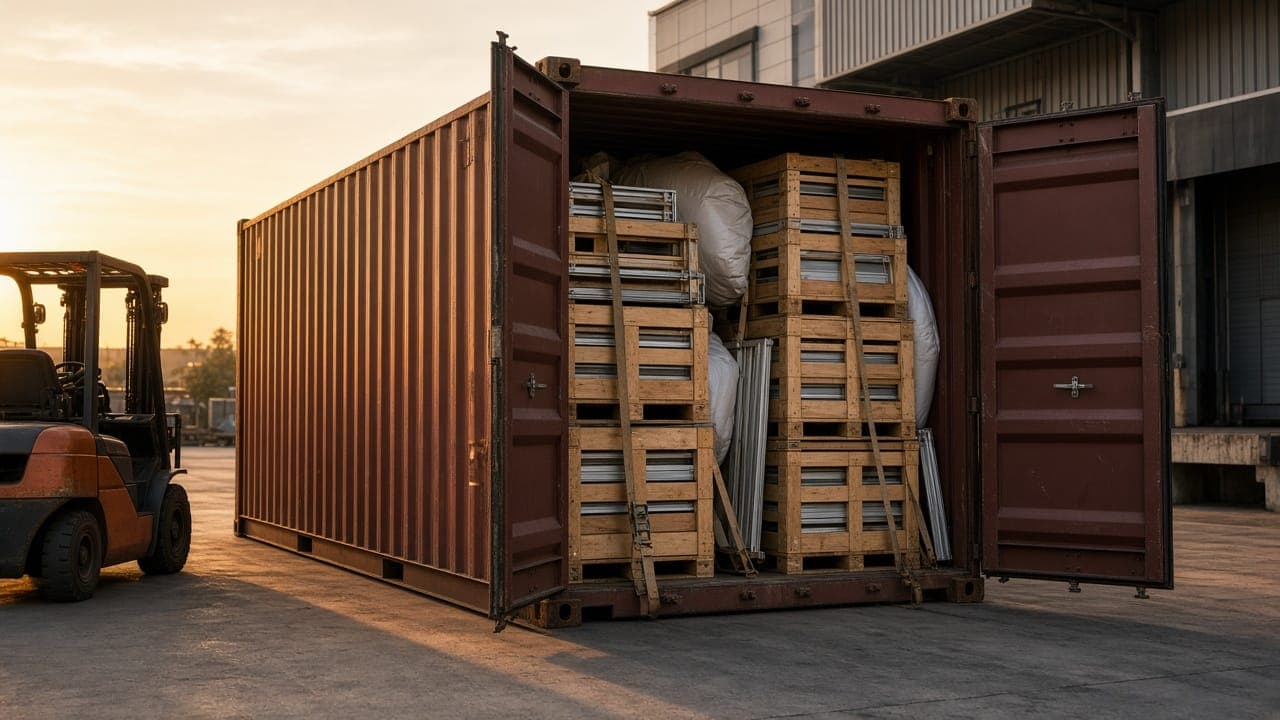
One 40HQ container holds roughly 180 m² of windows and doors in crates, depending on unit size. Glazed units should travel in ISPM-15-compliant crates with film, corner guards and foam; ARCVIEW's transit damage claim rate in 2025 was 0.07%. Choose your Incoterm deliberately — FOB and CIF are the most common for container shipments.
Customs clearance needs the correct HS code (most aluminium windows and doors fall under heading 7610), a commercial invoice, packing list, B/L and, where a trade agreement applies, a certificate of origin. Several jurisdictions apply anti-dumping or countervailing duties to Chinese aluminium extrusions, and whether finished windows are in scope depends on the ruling. Our landed cost guide explains this; always confirm the classification and duty position with a licensed customs broker before you order.
| Week | Stage | Who acts | Output / gate |
|---|---|---|---|
| 0–1 | Specification and RFQ | Buyer | Window schedule and performance brief |
| 1–2 | Quotes and shortlist | Suppliers / buyer | Itemised quotes; 3–5 suppliers shortlisted |
| 2–3 | Samples and test reports | Supplier / buyer | Corner samples received; reports verified with labs |
| 3 | Factory audit | Buyer or third party | Video or on-site audit report |
| 3–5 | Shop drawings | Supplier engineering | Signed drawings for every unit |
| 5 | Deposit and order | Buyer | 30% deposit; production slot confirmed |
| 5–10 | Production | Supplier | Weekly photos; 25–35 days |
| 10 | Pre-shipment inspection | Inspector | AQL report; balance or L/C documents released |
| 10–11 | Packing and loading | Supplier / forwarder | Loading photos; B/L issued |
| 11–16 | Ocean transit | Carrier | 12–34 days depending on destination |
| 16–17 | Customs and delivery | Broker / haulier | Duties paid; container delivered to site |
| 17–20 | Installation | Installer | Installed, tested and handed over |
Step 11: Installation and handover
Installation quality decides whether the windows perform as tested. Each unit should arrive with a tag matching the shop drawing, plus installation manuals. For projects over 1,000 m², ARCVIEW sends an installation supervisor to site. Brief your installer on waterproofing the window-to-wall joint before the container arrives, and keep 1–2% spare glass and hardware for breakage or site damage.
Document checklist
| Document | Issued by | When | Why it matters |
|---|---|---|---|
| Proforma invoice / purchase contract | Supplier | Before deposit | Defines price, Incoterm, payment and penalties |
| Signed shop drawings | Supplier, signed by buyer | Before deposit | Technical contract for each unit |
| Test reports and DoP / labels | Accredited lab / supplier | Before order | Building approval and CE, NFRC or AS 2047 compliance |
| Inspection report | Inspector | Before balance | Evidence that goods match drawings |
| Commercial invoice and packing list | Supplier | At shipment | Customs valuation and crate-by-crate contents |
| Bill of lading | Carrier / forwarder | At loading | Title to goods; trigger for balance payment |
| Certificate of origin | Chamber / customs authority | At shipment | Preferential duty under trade agreements |
| Insurance certificate | Insurer | At loading (CIF/CIP) | Claims for transit damage |
| Market certificates (e.g. SONCAP, SABER) | Approved bodies | Before shipment | Mandatory for clearance in some countries |
Frequently asked questions
- How long does it take to import windows from China?
- A first order typically takes 14–20 weeks from specification to installation. Factory production is usually 25–35 days after shop-drawing approval, and ocean transit is 5–34 days depending on destination. Most of the remaining time goes into quotes, samples, test-report checks and shop drawings, so preparing a complete window schedule early is the fastest way to shorten the programme.
- What payment terms are normal for Chinese window manufacturers?
- The usual structure is a 30% telegraphic transfer deposit to start production and the 70% balance against a copy of the bill of lading. Letters of credit at sight are common for larger orders; ARCVIEW accepts them above USD 80,000. Buyers should link the balance or L/C to an independent inspection report so payment depends on the goods matching the approved drawings.
- Do imported windows need local certification?
- Usually yes. The EU and UK require CE or UKCA marking under EN 14351-1, North American projects normally need NFRC ratings and NAFS test results, and Australia requires AS 2047. Test reports must cover the exact system and configuration supplied. Confirm with your local building authority or certifier which reports they accept before ordering, because retesting after delivery is slow and expensive.
- How many windows fit in a 40ft container?
- A 40HQ container typically holds around 180 m² of crated aluminium windows and doors, though the real figure depends on unit size, glass thickness and crate design. Large lift-and-slide panels or curtain wall units reduce the area per container, while small casement windows can increase it. Ask the supplier for a loading plan with crate dimensions and weights before booking freight.
- Do I need a customs broker to import windows?
- In practice, yes. A licensed customs broker confirms the HS code, calculates duty and VAT or GST, checks whether anti-dumping or countervailing duties apply to aluminium products from China, and lodges the import declaration. Engage the broker before signing the purchase order so the duty position is reflected in your landed cost and contract terms.
Sources & standards
- 01Incoterms® 2020 rules — International Chamber of Commerce
- 02Harmonized System nomenclature and customs guidance — World Customs Organization
- 03ISPM 15: Regulation of wood packaging material in international trade — International Plant Protection Convention
- 04Importing into the United States — U.S. Customs and Border Protection
- 05EU customs and taxation guidance — European Commission, DG Taxation and Customs Union