Key takeaways
- In Australia, windows and glazed doors are tested to AS 2047 using the AS 4420 test methods, at pressures set by the site wind classification N1–N6 (non-cyclonic) or C1–C4 (cyclonic).
- Wind classes are tied to design gust speeds in AS 4055: ultimate limit state speeds run from 34 m/s for N1 to 86 m/s for N6 and C4.
- The AS 2047 water penetration test pressure rises with the wind class, from about 150 Pa at N1–N2 to about 600 Pa at N6.
- Glass type and thickness must be selected to AS 1288 separately; an AS 2047 frame rating does not prove the glass is adequate for the size, wind pressure or human-impact zone.
- Bushfire-prone sites need windows that comply with AS 3959 for the site BAL, from BAL-12.5 up to BAL-FZ (flame zone), which can require toughened glass, screens or full-scale fire testing.
In Australia, windows and external glazed doors must meet AS 2047 (Windows and external glazed doors in buildings), referenced by the National Construction Code (NCC). Each product is tested to the AS 4420 methods at pressures set by its wind rating: N1–N6 for non-cyclonic regions and C1–C4 for cyclonic regions. Glass is selected separately to AS 1288, energy performance is reported through WERS, and bushfire-prone sites add the AS 3959 BAL requirements.
Which standards apply to a window in Australia
- AS 2047: performance requirements, test pressures by wind rating, labelling and installation for windows and external glazed doors.
- AS 4420 (Parts 0–5): the test methods, covering deflection, operating force, air infiltration, water penetration and ultimate strength.
- AS 4055 (housing) or AS/NZS 1170.2 (all buildings): how the site wind classification or design pressure is determined.
- AS 1288: glass selection and installation, including thickness for wind load and Grade A safety glass in human-impact zones.
- AS 3959: construction requirements in bushfire-prone areas by Bushfire Attack Level (BAL).
- NCC Section J and NatHERS: energy efficiency, using total-window U-value and SHGC from AFRC-method ratings such as WERS.
Wind classes N1–N6 and C1–C4
The building designer or engineer sets the site wind classification from region, terrain, shielding and topography. For housing within AS 4055 limits this gives N1–N6 or C1–C4. Taller or larger buildings use AS/NZS 1170.2 and a project-specific design pressure. The window must be rated at or above that classification for its position on the building.
| Class | Region | Serviceability gust speed | Ultimate gust speed | Serviceability pressure (approx.) | Ultimate pressure (approx.) | Water test pressure (approx.) |
|---|---|---|---|---|---|---|
| N1 | Non-cyclonic | 26 m/s | 34 m/s | ≈ 500 Pa | ≈ 700 Pa | ≈ 150 Pa |
| N2 | Non-cyclonic | 26 m/s | 40 m/s | ≈ 500 Pa | ≈ 1,000 Pa | ≈ 150 Pa |
| N3 | Non-cyclonic | 32 m/s | 50 m/s | ≈ 700 Pa | ≈ 1,500 Pa | ≈ 200 Pa |
| N4 | Non-cyclonic | 39 m/s | 61 m/s | ≈ 1,000 Pa | ≈ 2,200 Pa | ≈ 300 Pa |
| N5 | Non-cyclonic | 47 m/s | 74 m/s | ≈ 1,500 Pa | ≈ 3,300 Pa | ≈ 450 Pa |
| N6 | Non-cyclonic | 55 m/s | 86 m/s | ≈ 2,000 Pa | ≈ 4,500 Pa | ≈ 600 Pa |
| C1 | Cyclonic | 32 m/s | 50 m/s | As N3, plus cyclic | As N3, plus cyclic | Per AS 2047 |
| C2 | Cyclonic | 39 m/s | 61 m/s | As N4, plus cyclic | As N4, plus cyclic | Per AS 2047 |
| C3 | Cyclonic | 47 m/s | 74 m/s | As N5, plus cyclic | As N5, plus cyclic | Per AS 2047 |
| C4 | Cyclonic | 55 m/s | 86 m/s | As N6, plus cyclic | As N6, plus cyclic | Per AS 2047 |
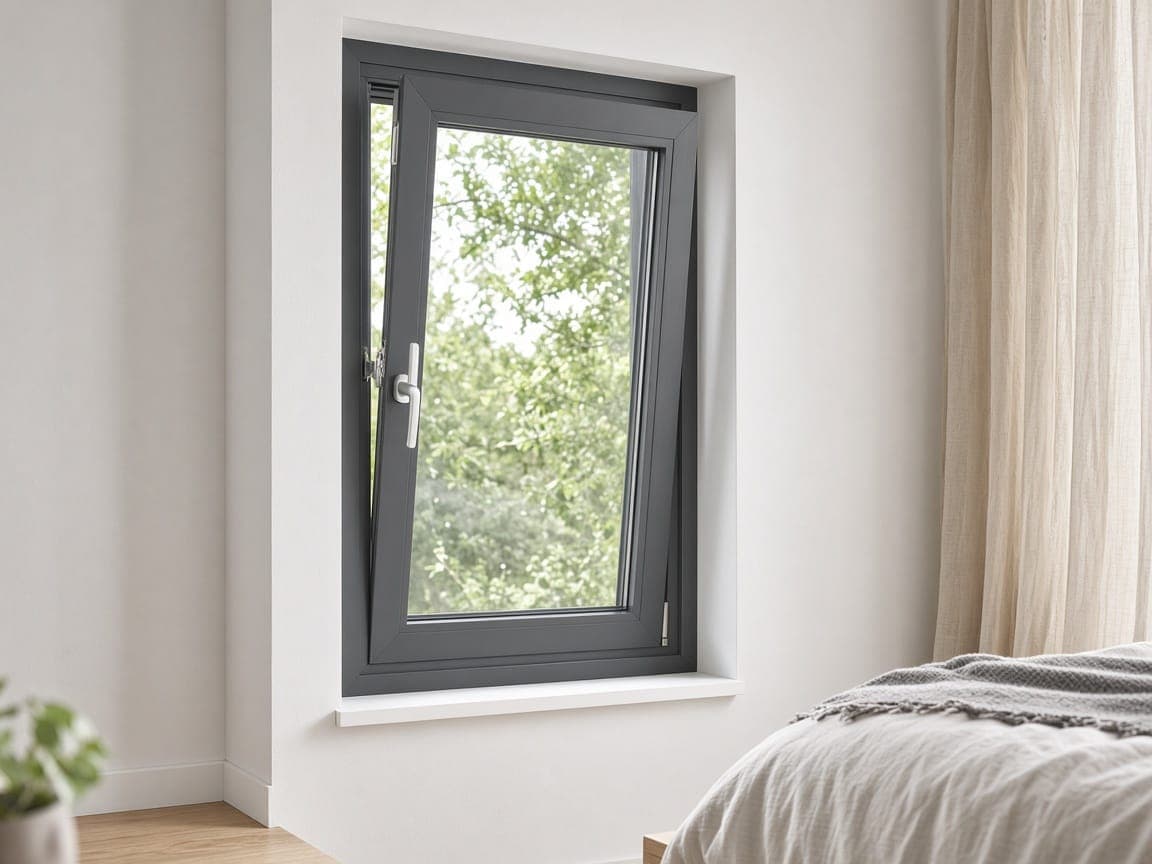
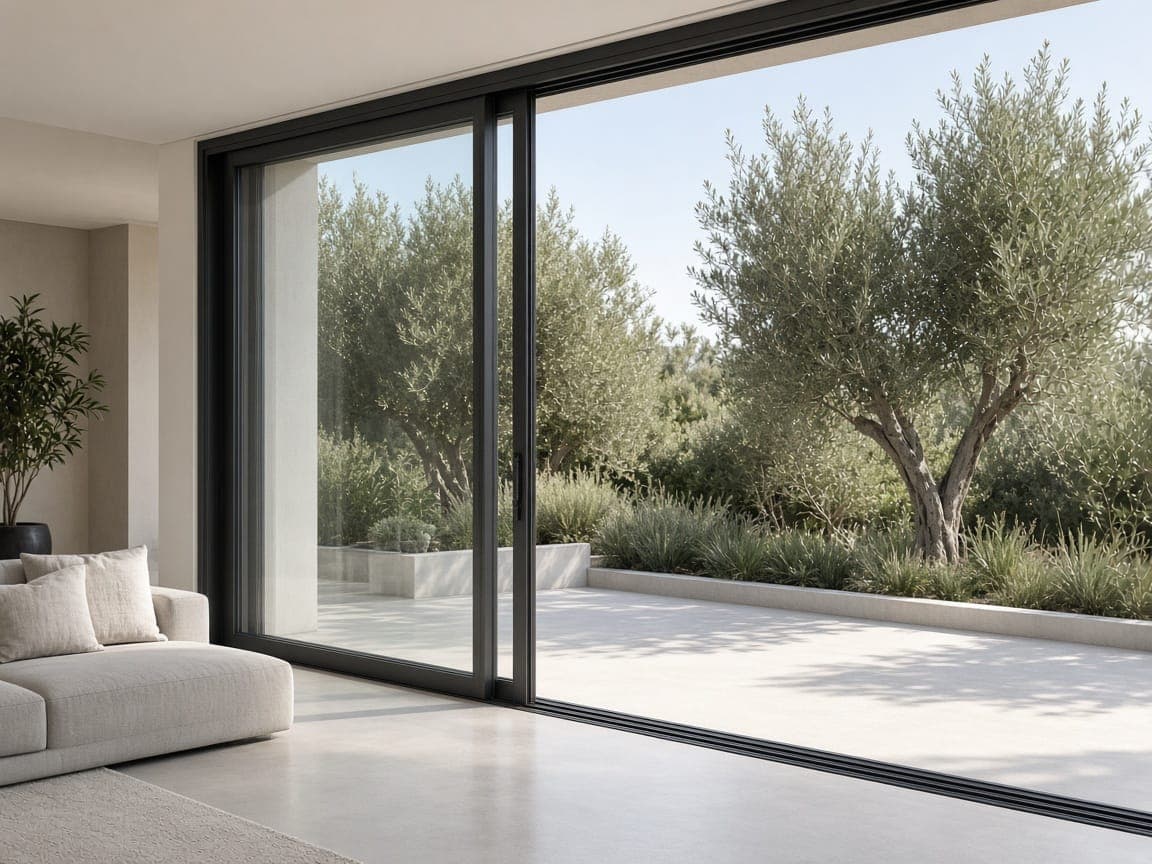
A rating is earned by test, not by calculation from a similar product. ARCVIEW's AS 2047-2014 report WTA-25-0144 from Windows Test Australia (NATA 1491, February 2025) rates the S120 lift-and-slide, C70 awning and F80 at N3 / C1 with a 450 Pa water result. Windows rated above the site class are acceptable. Windows rated below it are not, however good the rest of the specification.
The AS 4420 test sequence
| Step | Test | AS 4420 part | What is checked |
|---|---|---|---|
| 1 | Operating force | Part 2 | Force to open, close and lock sashes is within limits |
| 2 | Deflection | Part 1 | Frame and mullion deflection at serviceability pressure, typically limited to span/250, with no permanent damage |
| 3 | Air infiltration | Part 3 | Leakage at a set test pressure (75 Pa) within the AS 2047 limit |
| 4 | Water penetration | Part 4 | No uncontrolled water to the interior under spray at the class water pressure |
| 5 | Ultimate strength | Part 5 | No failure, glass breakage or sash disengagement at ultimate pressure; this is the last test because it can damage the specimen |
Glass to AS 1288
AS 2047 rates the window system. AS 1288 governs the glass. It sets the minimum thickness and type for a given pane size and ultimate wind pressure, and requires Grade A safety glass (toughened or laminated) in doors, side panels, low-level glazing, bathrooms and other human-impact zones. A test report on a 6.38 mm laminated specimen does not cover a larger pane of the same glass at a higher wind class. Ask the supplier for glass schedules that reference AS 1288 for each opening. On our Sydney clifftop project, the S120 used a toughened 6.38 mm laminated outer pane in a BAL-29 compliant IGU.
Energy ratings: WERS, AFRC and the NCC
The Window Energy Rating Scheme (WERS) rates windows from 0 to 10 stars separately for heating and cooling, using the Australian Fenestration Rating Council (AFRC) method, which is based on NFRC procedures. More useful to a designer are the two whole-window values behind the stars: total system U-value (Uw) and total system SHGC (SHGCw). NatHERS house ratings under NCC 2022 and the Section J commercial façade calculations use these values. Centre-of-glass figures from a glass brochure are not a substitute. ARCVIEW's S120, C70 awning and F80 carry a 5-star WERS cooling rating. See our U-value and SHGC guide for how the values interact.
Bushfire: AS 3959 BAL levels
| BAL | Radiant heat exposure | Typical window implications (summary) |
|---|---|---|
| BAL-LOW | Insufficient risk | No specific bushfire requirements |
| BAL-12.5 | Up to 12.5 kW/m² | Ember protection: screens with corrosion-resistant mesh, sealed gaps, suitable glass |
| BAL-19 | Up to 19 kW/m² | As BAL-12.5, with stricter glazing and frame material rules |
| BAL-29 | Up to 29 kW/m² | Toughened glass (typically at least 5 mm), metal or bushfire-resisting frames, screens |
| BAL-40 | Up to 40 kW/m² | Thicker toughened glass and protected frames, or a system tested to AS 1530.8.1 |
| BAL-FZ | Above 40 kW/m² (flame zone) | System tested to AS 1530.8.2, or bushfire shutters |
ARCVIEW's Australian windows are available for BAL-12.5 to BAL-29 with toughened outer panes, bushfire-rated seals and stainless mesh screens where required. BAL-40 and BAL-FZ need product-specific fire test evidence and must be confirmed per project. See our Australia market page.
New Zealand: NZS 4211
New Zealand does not use AS 2047. Windows are tested to NZS 4211 at levels set by the site wind zone (Low, Medium, High, Very High, Extra High, or specific engineering design). Weathertightness is demonstrated with the Building Code clause E2 acceptable solutions, and energy performance with clause H1, which is expressed as construction R-value (the inverse of U-value). An Australian report alone is not sufficient for a New Zealand consent.
Document checklist for the certifier
- AS 2047 test report from a NATA-accredited laboratory, ideally issued in the name of the company supplying the windows.
- Wind rating, water test pressure and maximum tested size for each window type, matched to the window schedule.
- AS 1288 glass selection for each opening, including safety-glass locations.
- WERS / AFRC certificate with total-window Uw and SHGCw for NatHERS or Section J.
- AS 3959 compliance statement for the site BAL, if the site is bushfire-prone.
- Installation instructions consistent with AS 2047 and the flashing details in our waterproofing guide.
The NCC and referenced standards are amended on a regular cycle, and states can vary them. Confirm the current requirements with your building certifier before ordering.
Frequently asked questions
- What does an N3 window rating mean?
- N3 is a non-cyclonic wind classification under AS 4055, with a design ultimate gust speed of 50 m/s and a serviceability speed of 32 m/s. An N3-rated window has passed AS 2047 testing to AS 4420 at the corresponding pressures, roughly 700 Pa serviceability, 1,500 Pa ultimate and about 200 Pa water. It suits any site classified N3 or lower.
- Can an N-rated window be used in a cyclonic region?
- Not automatically. Cyclonic classes C1–C4 have the same gust speeds as N3–N6, but cyclonic regions add cyclic-loading requirements because repeated gusts cause fatigue, and some elements need debris-impact resistance. A window must be tested and rated for the cyclonic class, such as C1 or C2, to be used there. Check with the project engineer and certifier.
- Does AS 2047 cover the glass in a window?
- Only partly. AS 2047 tests the complete window, but glass thickness and type for each pane must be selected under AS 1288 for its size, wind pressure and human-impact risk. A test specimen with one glass build-up does not prove a larger pane or thinner glass is adequate. Ask for an AS 1288 glass schedule for every opening.
- What is the difference between WERS stars and a U-value?
- WERS stars, from 0 to 10, summarise relative heating and cooling performance for a typical house. The total-window U-value (Uw) and solar heat gain coefficient (SHGCw) behind the stars are the actual inputs used in NatHERS ratings and NCC Section J calculations. Compare quotes on Uw and SHGCw from AFRC-method certificates, not on stars or centre-of-glass values.
- Which BAL rating needs fire-tested windows?
- Under AS 3959, sites rated BAL-40 and BAL-FZ (flame zone) are the levels where windows usually need product-specific fire-test evidence, to AS 1530.8.1 for BAL-40 or AS 1530.8.2 for BAL-FZ, unless deemed-to-satisfy provisions or bushfire shutters are used. BAL-12.5 to BAL-29 are mainly met through specified glass, frame materials, seals and ember screens.
Sources & standards
- 01AS 2047, AS 4420, AS 1288 and AS 3959 Australian Standards — Standards Australia
- 02Window Energy Rating Scheme (WERS) — Australian Glass & Window Association
- 03National Construction Code — Australian Building Codes Board
- 04New Zealand Building Code clauses E2 and H1 guidance — Ministry of Business, Innovation & Employment (Building Performance)
- 05NZS 4211 Specification for performance of windows — Standards New Zealand