Key takeaways
- Low-E argon double glazing typically reaches Ug 1.0–1.1 W/m²K and two-coated argon triple glazing 0.5–0.7 W/m²K, which roughly halves heat loss through the glass.
- Triple glazing adds a third pane, about 10 kg/m² for 4 mm glass, so a 3.2 × 3.6 m sliding panel with three 6 mm panes carries about 520 kg of glass alone.
- Triple glazing usually pays back in cold climates above about 3,000 heating degree-days, such as Toronto or Berlin, but rarely in warm-temperate, hot-arid or tropical climates.
- Triple glazing does not automatically improve acoustics; asymmetric panes and acoustic laminated glass raise Rw from about 30–32 dB to 40–45 dB more effectively than a third pane.
- Compare whole-window Uw or NFRC U-factor, not just Ug, because a poor frame or aluminium spacer can cancel much of the benefit of triple glazing.
Triple glazing roughly halves heat loss through the glass compared with good double glazing (Ug 0.5–0.7 vs 1.0–1.1 W/m²K), but it adds about 50% more glass weight and typically 15–20% to the window price. It is worth specifying in cold climates, for Passive House projects and for very large panes facing cold winds. In warm-temperate, hot-arid and tropical climates, a well-specified Low-E double unit is usually the better investment.
Ug values: what the numbers mean
Ug is the centre-of-glass thermal transmittance, calculated to EN 673. The US equivalent is the centre-of-glass U-factor in Btu/h·ft²·°F, where 1 W/m²K ≈ 0.176 Btu/h·ft²·°F. Three technologies do most of the work: a Low-E coating that reflects long-wave heat back into the room, argon or krypton gas that conducts less heat than air, and the cavity width, which is optimal at about 14–18 mm for argon.
| Build-up (mm) | Ug (W/m²K) | Centre-of-glass U (Btu/h·ft²·°F) | Glass weight (kg/m²) | Unit thickness | Light transmission |
|---|---|---|---|---|---|
| 4/16/4, air, uncoated | 2.7–2.8 | ≈ 0.48 | 20 | 24 mm | ≈ 80% |
| 4/16/4, Low-E, air | 1.4–1.6 | ≈ 0.26 | 20 | 24 mm | ≈ 75–80% |
| 4/16/4, Low-E, 90% argon | 1.0–1.1 | ≈ 0.18–0.19 | 20 | 24 mm | ≈ 70–80% |
| 6/16/6, solar-control Low-E, argon | 1.0–1.1 | ≈ 0.18–0.19 | 30 | 28 mm | ≈ 40–70% |
| 4/12/4/12/4, 2 × Low-E, argon | 0.7–0.8 | ≈ 0.13 | 30 | 36 mm | ≈ 65–72% |
| 4/16/4/16/4, 2 × Low-E, argon | 0.5–0.6 | ≈ 0.10 | 30 | 44 mm | ≈ 65–72% |
| 4/12/4/12/4, 2 × Low-E, krypton | ≈ 0.5 | ≈ 0.09 | 30 | 36 mm | ≈ 65–72% |
Triple glazing also lowers the solar heat gain coefficient (SHGC, or g-value) by typically 0.05–0.15 and cuts light transmission by 5–10 points. In a heating-dominated house with large south-facing glass, part of the winter solar gain is lost. Our guide to U-value and SHGC explains how to balance the two.
Low-E, argon and warm-edge spacers
- Low-E coating: a soft-coat Low-E layer on the cavity side of one pane is the single biggest improvement, taking Ug from about 2.8 to 1.4–1.6 W/m²K. Triple units use two coatings.
- Argon fill: about 90% argon lowers Ug by a further 0.3–0.4 W/m²K. EN 1279-3 limits gas loss to under 1% per year, so a properly sealed unit keeps most of its fill for decades.
- Warm-edge spacer: replacing an aluminium spacer (ψ ≈ 0.06–0.11 W/mK) with a stainless or polymer warm-edge spacer (ψ ≈ 0.03–0.05 W/mK) typically improves whole-window Uw by 0.1–0.2 W/m²K. It also raises the glass edge temperature by several degrees, reducing condensation at the bottom of the pane.
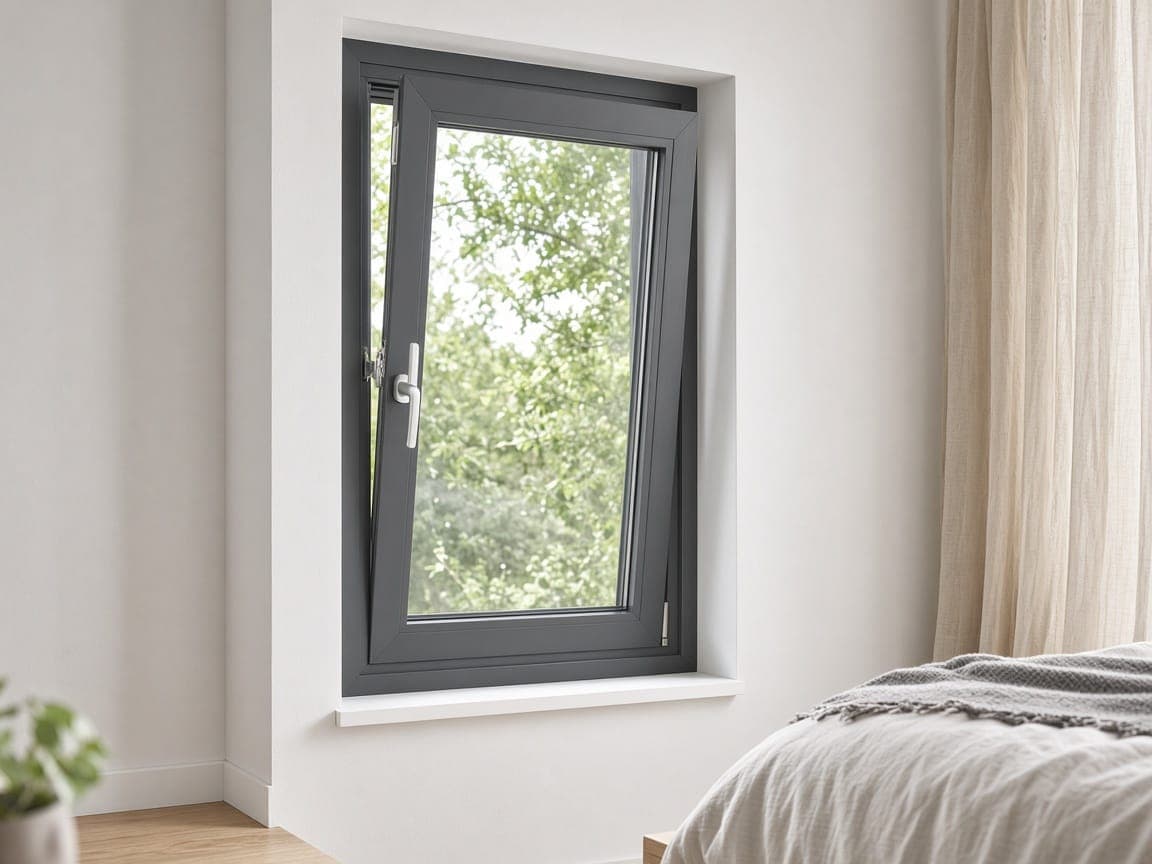
The frame matters as much as the glass. Triple glazing in a frame with a narrow thermal break gives a disappointing Uw. See thermal-break aluminium explained. Our C80 tilt-turn with a 34 mm polyamide break reaches Uw 0.9 W/m²K with triple glazing, and Uw 1.2 W/m²K with double.
Weight and structural consequences
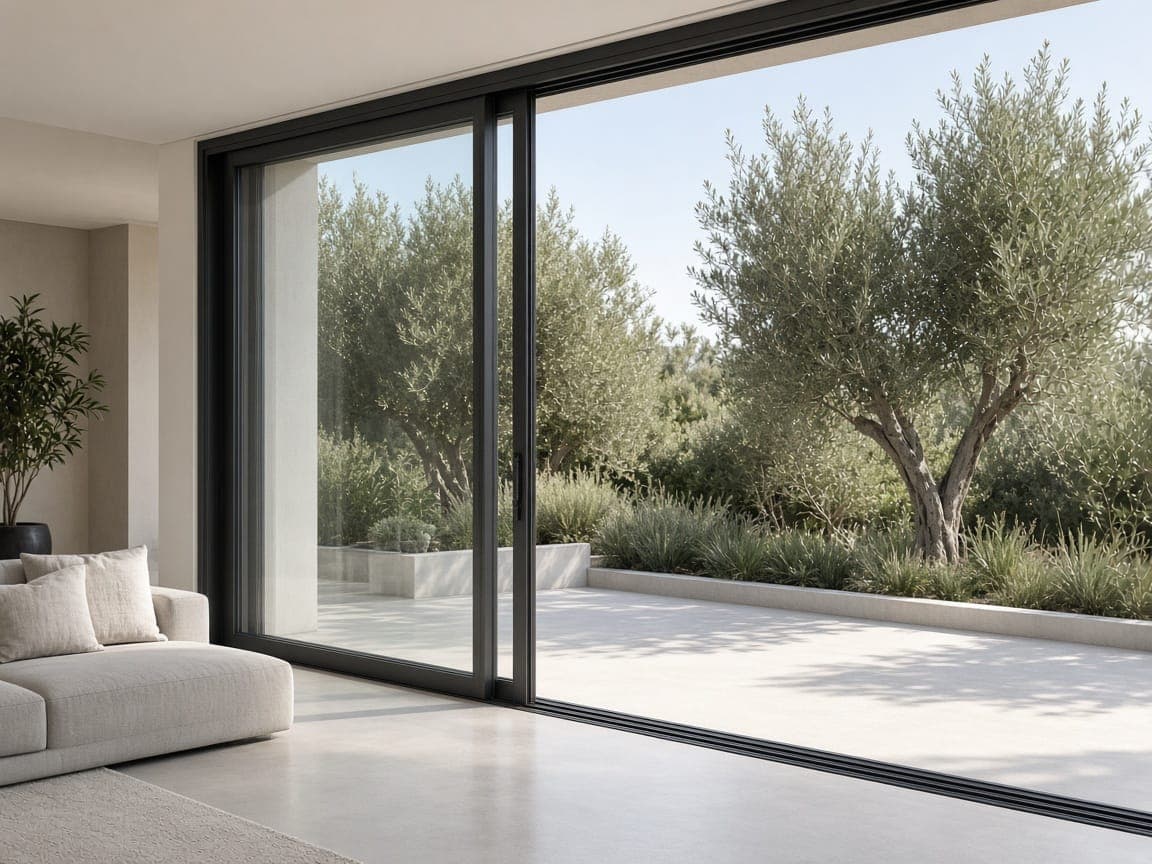
Each extra 4 mm pane adds about 10 kg/m², and each 6 mm pane about 15 kg/m². That matters most for opening sashes and large sliders. A 1.2 × 2.4 m tilt-turn sash with 4/16/4/16/4 triple glazing carries about 86 kg of glass, well within concealed hinges rated to 150 kg. A 3.2 × 3.6 m lift & slide panel with three 6 mm panes carries about 520 kg of glass before the frame, close to a 600 kg hardware limit. For panels that large, we use a thinner centre pane, reduce the panel size or stay with double glazing.
Safety-glass rules add weight. In doors and low-level glazing, codes typically require toughened or laminated glass on both exposed faces. A triple-glazed door therefore often becomes 6 mm toughened, 4 mm float and 6.38 mm laminated, at about 41 kg/m² against about 31 kg/m² for an equivalent double unit. Unit depth also has to suit the frame rebate. Triple units of 36–52 mm need a glazing pocket designed for them, so confirm the maximum IGU thickness before mixing double and triple glazing on the same elevation. Our casement and lift & slide frames accept 24–52 mm units.
Acoustic performance: laminated glass beats a third pane
Many buyers assume triple glazing is quieter. Often it is not, because two narrow cavities can resonate at traffic-noise frequencies. Typical sound reduction values are about Rw 30–32 dB for symmetric 4/16/4 double glazing and 32–35 dB for symmetric triple glazing. Asymmetric 6/16/10 double glazing reaches about 36–38 dB. Double glazing with acoustic laminated PVB, for example 10.8 mm acoustic laminate, reaches 40–45 dB. Our casement windows reach up to Rw 45 dB with acoustic laminated glass, and our lift & slide doors up to 42 dB. For noisy sites, specify mass asymmetry and acoustic interlayers first, and add a third pane only if thermal performance requires it.
Cost and payback
Moving from double to triple Low-E glazing typically adds 30–50% to the glass cost and 15–20% to the installed window price. In our own pricing, triple Low-E adds about 18% over double, and acoustic laminated glazing about 25%. A Ug improvement of about 0.45 W/m²K saves roughly 0.45 × heating degree-days × 24 ÷ 1,000 kWh per m² of glass per year:
- Toronto, about 3,900 degree-days: about 42 kWh/m² per year.
- London, about 2,800 degree-days: about 30 kWh/m² per year.
- Sydney, about 700 degree-days: about 8 kWh/m² per year, too little to justify the premium on energy grounds.
At a delivered heating cost of about USD 0.09 per kWh, payback on a premium of USD 27–40 per m² is roughly 7–11 years in Toronto and 10–15 years in London. In Sydney it is several decades. Reduced solar gain, comfort near the window and condensation resistance shift the result in either direction.
Climate-based recommendation
| Climate (examples) | Heating degree-days (base 18 °C, approx.) | Recommendation | Target Ug / SHGC |
|---|---|---|---|
| Tropical humid (Manila, Lagos, Singapore) | < 100 | Double, solar-control Low-E; laminated in typhoon zones | Ug ≤ 1.6; SHGC ≤ 0.30 |
| Hot-arid (Dubai, Riyadh) | < 500 | Double, solar-control Low-E, argon | Ug 1.0–1.6; SHGC ≤ 0.28 |
| Warm-temperate (Sydney, Los Angeles, Madrid) | 500–2,000 | Double Low-E, argon | Ug 1.0–1.3; SHGC 0.3–0.5 by orientation |
| Cool-temperate (London, Paris, Seattle) | 2,000–3,000 | Double Low-E argon for most codes; triple for Passive House | Ug 1.0–1.1, or 0.5–0.7 |
| Cold (Toronto, Berlin, Chicago) | 3,000–4,500 | Triple Low-E, argon, warm-edge | Ug 0.5–0.7 |
| Very cold (Winnipeg, Anchorage, northern Scandinavia) | > 4,500 | Triple, argon or krypton, warm-edge | Ug ≤ 0.6 |
In the UK, double-glazed C80 windows at Uw 1.2 W/m²K meet Part L for most new and replacement work. See our UK market page. For Canadian projects we specify triple Low-E argon as standard, and our NFRC-rated C80 reaches U-0.20 (imperial).
Frequently asked questions
- Is triple glazing worth it?
- In cold climates with roughly 3,000 or more heating degree-days, such as Toronto, Berlin or Chicago, triple glazing usually pays back in about 7–15 years and improves comfort near the windows. In warm-temperate, hot-arid and tropical climates the energy saving is small, and a well-specified Low-E argon double unit, with solar control where needed, gives better value for money.
- What is a good Ug value for double and triple glazing?
- A good modern double-glazed unit with a soft-coat Low-E coating and 90% argon reaches Ug 1.0–1.1 W/m²K. Good triple glazing with two Low-E coatings and argon reaches 0.5–0.7 W/m²K, and krypton-filled units with narrower cavities reach about 0.5. Uncoated air-filled double glazing is about 2.7–2.8 W/m²K and no longer meets most European or North American energy codes.
- How much heavier is triple glazing?
- Each additional 4 mm pane adds about 10 kg/m², since glass weighs about 2.5 kg/m² per mm of thickness. A typical 4/16/4 double unit weighs 20 kg/m² and a 4/16/4/16/4 triple unit 30 kg/m². With 6 mm panes the figures rise to 30 and 45 kg/m². Hinges, rollers and lifting equipment must be sized for the extra weight.
- Does triple glazing reduce noise better than double glazing?
- Not necessarily. Symmetric triple glazing typically reaches about Rw 32–35 dB, only slightly better than symmetric double glazing at 30–32 dB. Asymmetric pane thicknesses, wider cavities and acoustic laminated PVB are more effective, with acoustic laminated double glazing reaching about 40–45 dB. For road, rail or airport noise, specify acoustic laminate first and add a third pane only for thermal reasons.
- Why does my new triple glazing have condensation on the outside?
- External condensation on clear, cold, still mornings shows the glazing is insulating well. Very little indoor heat reaches the outer pane, so it cools below the dew point of the outside air, just as a car windscreen does overnight. It usually clears within a few hours of sunrise. It is not a seal failure, which would show as condensation between the panes.
Sources & standards
- 01Glass for Europe: energy-efficient glazing and Low-E coatings — Glass for Europe
- 02Efficient Windows Collaborative: window technologies and climate-specific selection — Efficient Windows Collaborative
- 03Update or Replace Windows — U.S. Department of Energy — Energy Saver
- 04Certified Passive House components: window and glazing criteria — Passive House Institute
- 05NFRC 100 / 200: U-factor and SHGC rating procedures — National Fenestration Rating Council
- 06EN 673 and EN 1279: Glass in building — U-value calculation and insulating glass units — European Committee for Standardization (CEN)