Key takeaways
- Windows and external pedestrian doors sold in the EU/EEA must be CE marked against EN 14351-1 and supplied with a Declaration of Performance (DoP) signed by the manufacturer.
- Most windows and doors follow AVCP system 3: a notified testing laboratory determines the product type, but the manufacturer runs factory production control without third-party audit, so no notified-body ‘CE certificate’ exists.
- Fire-resistant and smoke-control doorsets add EN 16034 and move to AVCP system 1, which requires a notified certification body to inspect the factory and issue a certificate of constancy of performance.
- Air permeability Class 4 (EN 12207) means no more than 3 m³/h·m² leakage at 100 Pa reference pressure, the best class available for windows.
- Wind class C5 (EN 12210) means a 2,000 Pa deflection-test pressure with frame deflection limited to 1/300 of span; it is a test class, not your site design wind load.
CE marking is mandatory for windows and external pedestrian doors placed on the EU/EEA market because EN 14351-1 is a harmonised standard under the Construction Products Regulation (CPR). For most products the route is AVCP system 3: a notified testing laboratory determines the product type (formerly called initial type testing, ITT), the manufacturer operates its own factory production control (FPC), and the manufacturer signs a Declaration of Performance (DoP) and affixes the CE mark. Fire- and smoke-control doors add EN 16034 and move to system 1, which brings a notified certification body into the factory.
What the Construction Products Regulation requires
Under Regulation (EU) No 305/2011, once a harmonised standard is cited in the Official Journal, a manufacturer placing a covered product on the market must draw up a DoP and apply the CE mark. EN 14351-1:2006+A2:2016 covers windows, roof windows and external pedestrian doorsets without fire or smoke characteristics. Internal doors fall under EN 14351-2, curtain walling under EN 13830 and industrial or garage doors under EN 13241.
The CE mark is not a quality mark. It states that the declared performances were determined by the prescribed methods. It does not prove that the product suits a particular building. Required levels are set nationally (energy rules, wind design, security), and the DoP is the document a specifier uses to check them. A revised CPR, Regulation (EU) 2024/3110, has been adopted and applies over a long transition. Until new harmonised specifications for windows are cited, DoPs to EN 14351-1 remain the working basis. Check the European Commission's CPR page for the current status.
AVCP systems: who does what
| Task | System 3 (most windows and doors) | System 1 (fire/smoke doors via EN 16034) |
|---|---|---|
| Determination of product type (testing or calculation) | Notified testing laboratory | Notified product certification body |
| Factory production control | Manufacturer, no third-party audit | Manufacturer |
| Initial inspection of plant and FPC | Not required | Notified body |
| Continuous surveillance of FPC | Not required | Notified body, typically annual |
| Document issued by the notified body | Test and classification reports only | Certificate of constancy of performance |
| Who signs the DoP and affixes CE | Manufacturer | Manufacturer |
In practice, this means a system 3 window has no ‘CE certificate’. A test house may issue a certificate-style document, but under system 3 the evidence is the notified laboratory's test and classification reports plus the manufacturer's FPC. Under CPR Article 36, a fabricator may also use shared or cascading type-test results from a system house. To do that, it needs a written agreement and must fabricate exactly to the system manual. The fabricator is still legally the manufacturer.
The core tests and the classes they produce
Air, water and wind are tested on one specimen in a fixed order. The broad order is air permeability (EN 1026), watertightness (EN 1027), then wind resistance (EN 12211), with an air re-test after the repeated wind pressures and the destructive safety test last. Results are classified to EN 12207, EN 12208 and EN 12210. Thermal transmittance Uw is calculated to EN ISO 10077-1/-2 or measured in a hot box to EN ISO 12567-1, usually at the reference size of 1.23 × 1.48 m.
| Class | Max. test pressure | Reference leakage at 100 Pa, by area | Reference leakage at 100 Pa, by joint length |
|---|---|---|---|
| 0 | Not tested | — | — |
| 1 | 150 Pa | 50 m³/h·m² | 12.50 m³/h·m |
| 2 | 300 Pa | 27 m³/h·m² | 6.75 m³/h·m |
| 3 | 600 Pa | 9 m³/h·m² | 2.25 m³/h·m |
| 4 | 600 Pa | 3 m³/h·m² | 0.75 m³/h·m |
| EN 12208 class | Water test pressure | EN 12210 class | P1 deflection / P2 repeated / P3 safety |
|---|---|---|---|
| 1A | 0 Pa (15 min spray) | 1 | 400 / 200 / 600 Pa |
| 3A | 100 Pa | 2 | 800 / 400 / 1,200 Pa |
| 5A | 200 Pa | 3 | 1,200 / 600 / 1,800 Pa |
| 7A | 300 Pa | 4 | 1,600 / 800 / 2,400 Pa |
| 9A | 600 Pa | 5 | 2,000 / 1,000 / 3,000 Pa |
| Exxx | Above 600 Pa in 150 Pa steps (E750, E900, E1050…) | Exxxx | P1 above 2,000 Pa |
How to read a Declaration of Performance
- Unique DoP reference and the product-type identification code, which must match the CE label.
- Intended use, for example windows and external pedestrian doorsets for domestic and commercial buildings.
- Manufacturer name and address. If an importer rebrands the product, the importer takes on the manufacturer's obligations.
- AVCP system, which should be 3 for a standard window.
- Notified body name and four-digit number, plus the reports relied on.
- Harmonised standard and edition, currently EN 14351-1:2006+A2:2016.
- Declared performances for each essential characteristic: wind, water, air, Uw, acoustic Rw, dangerous substances, impact resistance and safety devices as relevant. ‘NPD’ (no performance determined) is allowed for characteristics that are not declared.
- Signature, place and date by a person authorised by the manufacturer.
Read the classes against the specification, not against marketing copy. A wind class of C5 does not tell you the design wind load at a 20th-floor corner. The façade engineer still derives site pressure under EN 1991-1-4 and its national annex, then checks that the declared class covers it with whatever margin national rules require. Also check the declared size range. Extended-application rules let results apply to smaller sizes and some variants, but a larger sash, thinner glass or different gasket can require re-testing.
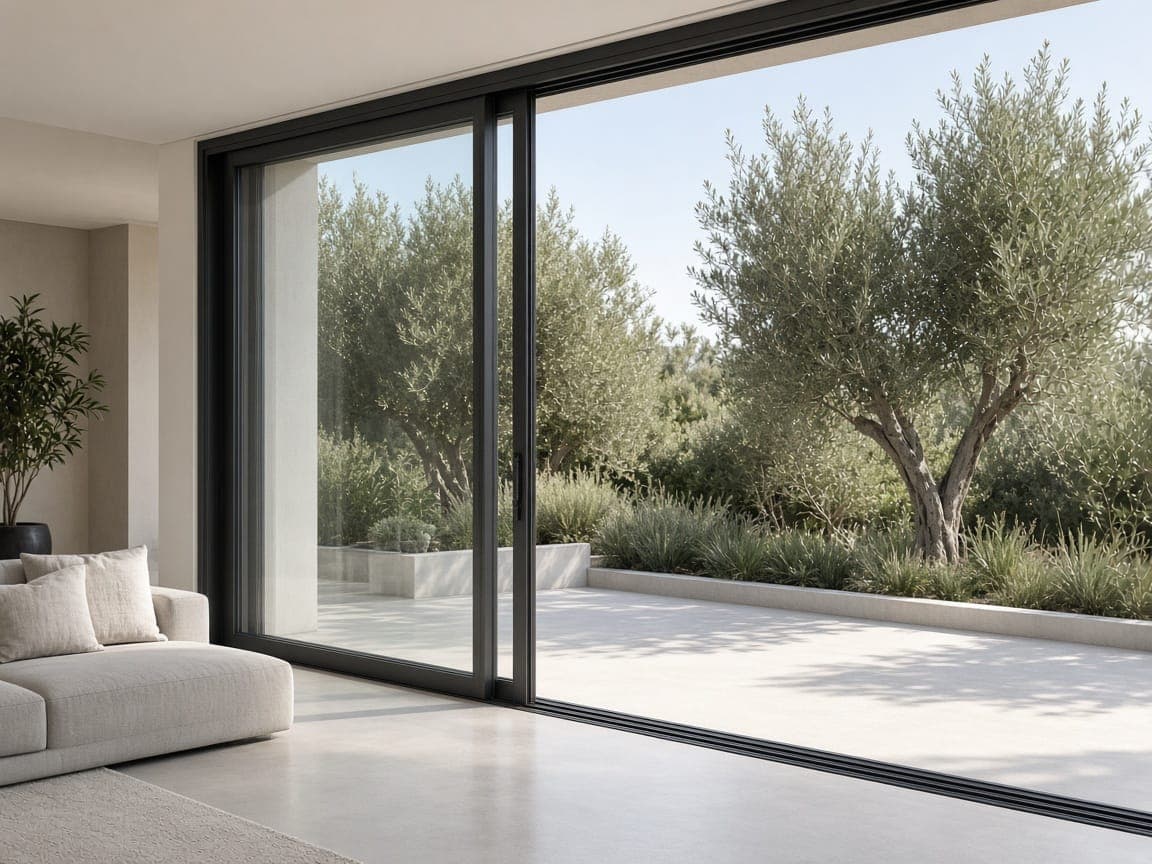
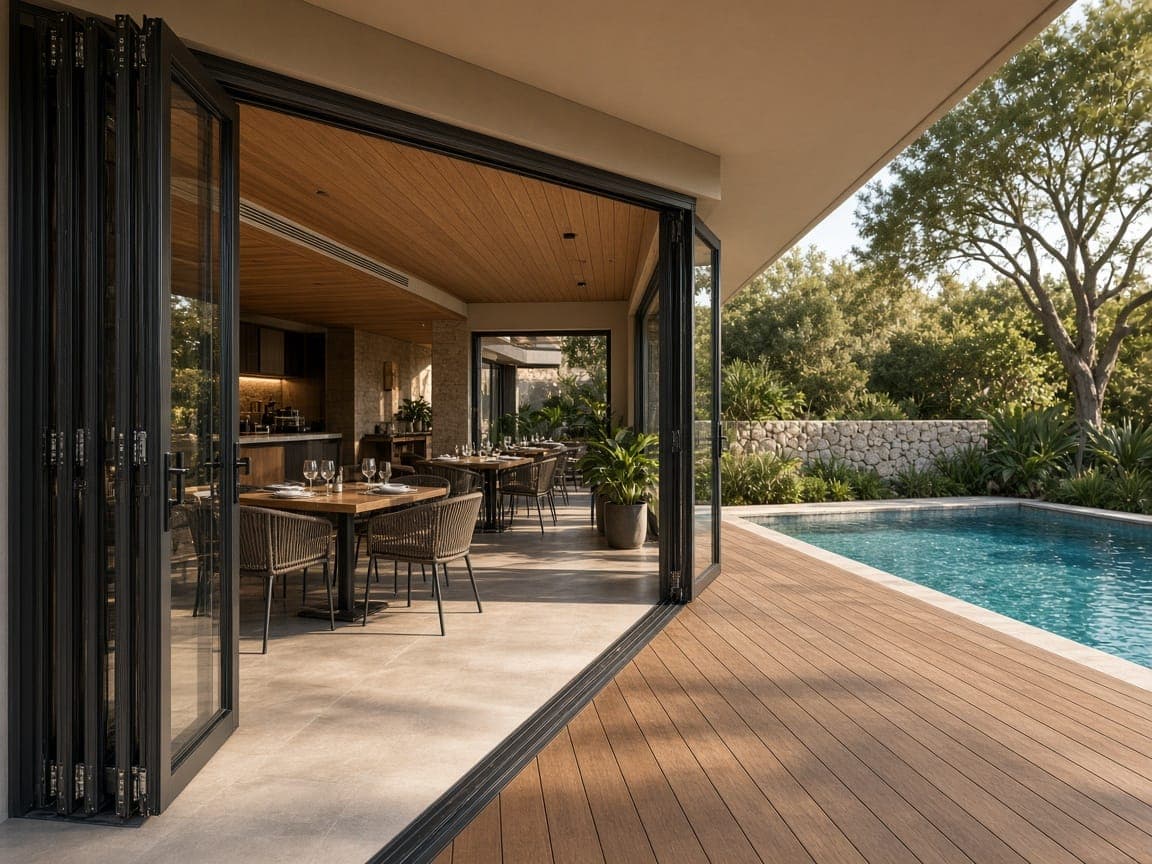
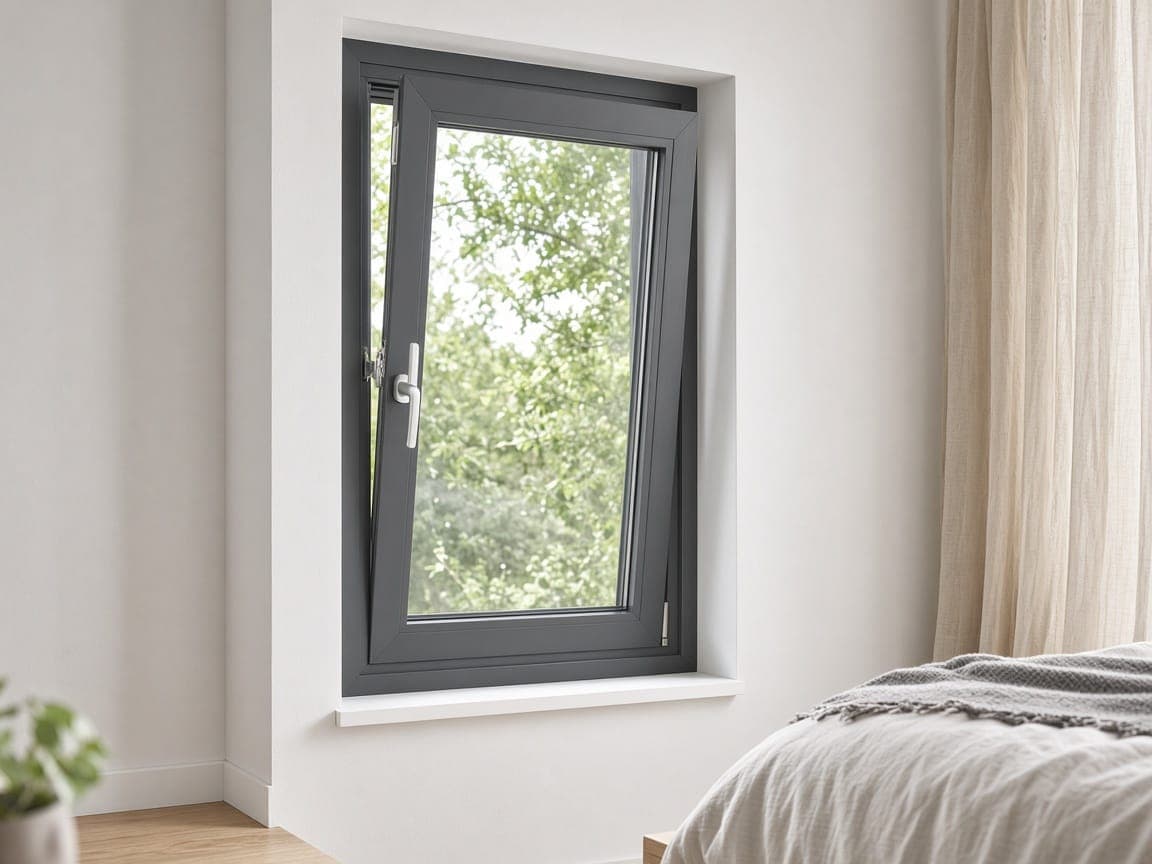
As an example, ARCVIEW's CE file for the C70, C80, S90, S120 and F68 families cites report GZIN2501014562CM from SGS Guangzhou (Notified Body 0598), issued January 2025. Each system has its own DoP. The S120 lift-and-slide declares Class 4 / E900 / C5. The C80 casement declares Class 4 / E1050 / C5 with Uw from 0.9 W/m²K. The F68 bi-fold declares Class 3 / 7A / C3. Full reports are on our certifications page.
Factory production control
FPC is the manufacturer's documented system for making sure every unit matches the tested type. That includes incoming checks on profiles, gaskets, hardware and IGUs, process controls, final inspection, calibration, traceability and handling of nonconforming product. The CPR requires the DoP and technical documentation to be kept for 10 years. ISO 9001 can host FPC but is neither required nor sufficient on its own. ARCVIEW runs FPC within its Bureau Veritas ISO 9001:2015 certificate (CN-QMS-22-4471) and water-spray tests 100% of sliding and casement units before packing.
UKCA and Great Britain
Great Britain uses the UK CPR with BS EN 14351-1 as a designated standard, UK Approved Bodies instead of EU notified bodies, and the UKCA mark. The government has extended recognition of CE marking for construction products in Great Britain more than once, so check GOV.UK for the current deadline before you print labels. Northern Ireland follows EU rules. For UK projects, ARCVIEW issues a UKCA DoP alongside the CE DoP for every order.
Importer's document checklist
- DoP in the official language required by the destination member state, supplied on paper or electronically.
- CE label on the product, packaging or accompanying documents: CE mark, last two digits of the year first affixed, manufacturer, DoP reference, standard and declared values.
- Notified-laboratory test and classification reports covering the sizes and configurations ordered.
- Uw calculation for the actual window sizes, as required by your energy rules (see our U-value guide).
- Separate DoP for insulating glass units to EN 1279-5.
- Safety and installation instructions, required under CPR Article 11(6).
Under CPR Article 13, importers must check that the manufacturer has drawn up the DoP and technical documentation, put their own name and contact address on the product or packaging, and keep a copy of the DoP for 10 years. Our guide to importing windows from China covers the commercial side. Requirements and transition dates change, so always confirm the current position with your national market surveillance authority or building control body.
Frequently asked questions
- Is there a CE certificate for windows?
- Not for standard windows. Windows and external doors without fire or smoke characteristics follow AVCP system 3, where a notified laboratory issues test and classification reports and the manufacturer signs the Declaration of Performance. Only system 1 products, such as fire-resistant doorsets assessed with EN 16034, receive a certificate of constancy of performance from a notified certification body after a factory inspection.
- What does E900 mean on a window DoP?
- E900 is an EN 12208 watertightness class. It means the specimen stayed watertight under continuous water spray while the test pressure was raised in steps to 900 Pa. Classes above 9A (600 Pa) are written as E followed by the pressure in pascals, in 150 Pa steps. Use the method A classes for exposed façades; method B classes apply to sheltered positions.
- Does wind class C5 mean a window resists 5,000 Pa?
- No. Under EN 12210, class 5 means a 2,000 Pa deflection-test pressure (P1), 1,000 Pa for 50 repeated pulses (P2) and a 3,000 Pa safety test (P3). The letter C limits frontal deflection to 1/300 of span at P1. Results above 2,000 Pa are written as Exxxx. Site design pressure must still be calculated by an engineer.
- Can a fabricator use its system supplier's test reports?
- Yes, under CPR Article 36 a fabricator may use shared or cascading type-test results from a system house. It needs a written agreement giving access to the results and must build the window exactly as tested: same profiles, gaskets, hardware and glazing method. The fabricator remains the manufacturer, signs its own DoP and runs its own factory production control.
- Is UKCA marking required for windows sold in Great Britain?
- UKCA is the Great Britain conformity mark under the UK CPR, using BS EN 14351-1 as the designated standard. The UK government has repeatedly extended acceptance of CE marking for construction products, so CE-marked windows can currently be placed on the GB market. Check the GOV.UK guidance for the current deadline. Northern Ireland follows EU CE marking rules.
Sources & standards
- 01Construction Products Regulation (CPR) overview — European Commission
- 02Regulation (EU) No 305/2011 laying down harmonised conditions for the marketing of construction products — EUR-Lex, Publications Office of the European Union
- 03European Committee for Standardization (EN 14351-1, EN 12207, EN 12208, EN 12210) — CEN
- 04Using the UKCA marking — UK Government (GOV.UK)